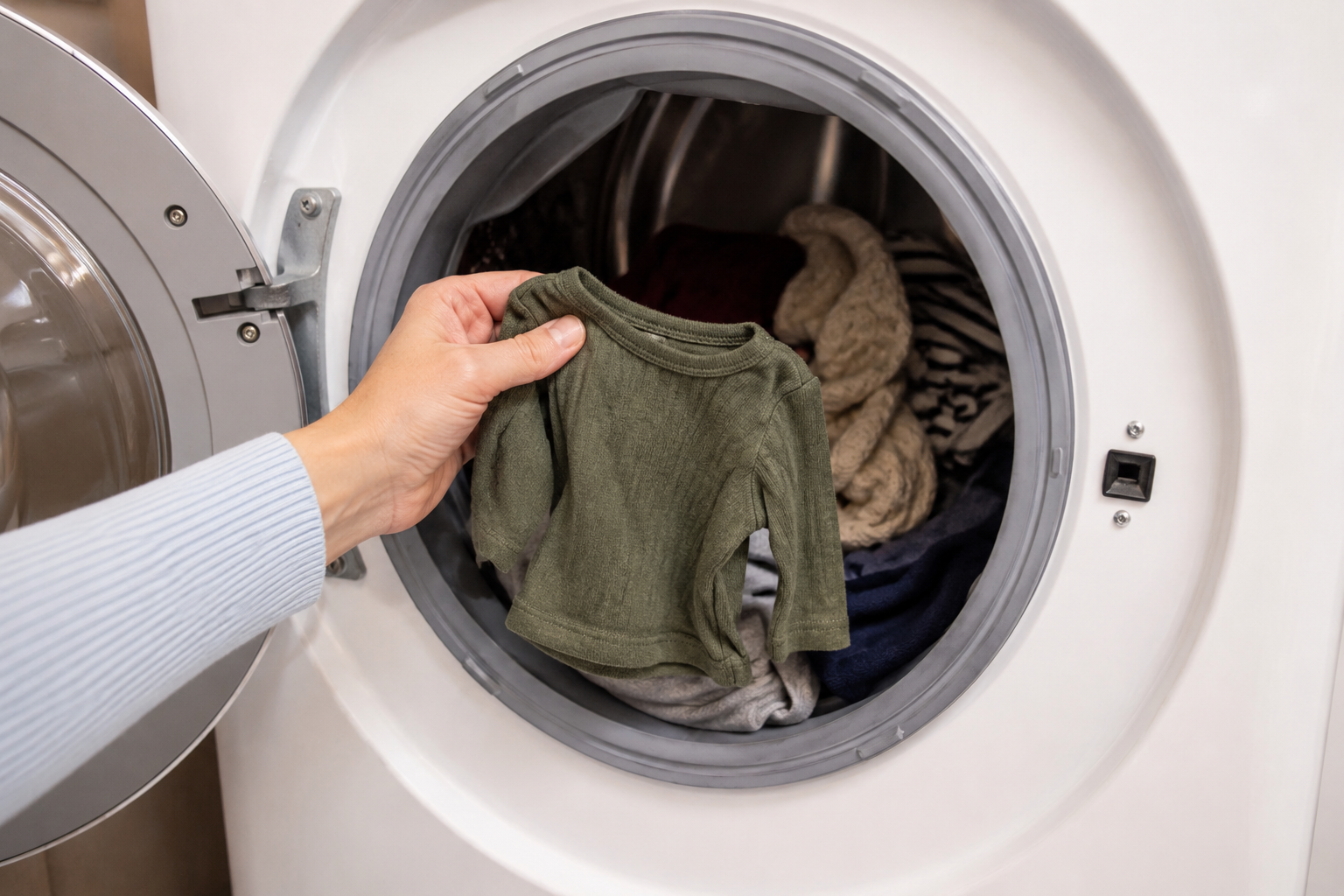
Not every fabric reacts to the washing machine the same way. Some shrink a little. Some shrink a lot. And a few can be permanently damaged after just one wrong cycle.
So if you’ve ever pulled something out of the dryer and wondered what happened to it, this guide is for you. Here’s a breakdown of the most common fabrics, how much each one typically shrinks, what triggers it, and the one protection move that matters most for each, including when dry cleaning is the only safe option.
Shrinkage isn’t random. During manufacturing, most fabrics are stretched and tensioned to hold a specific shape. Heat and agitation during washing release that tension, and the fibers snap back. That contraction is shrinkage.
Preventing clothes from shrinking begins with understanding heat isn't the only factor. It’s heat combined with moisture, or agitation, or both. Individual fabrics respond to these triggers differently, which is why a washing method that works fine for cotton can destroy wool.
The two main shrinkage triggers:
Cotton is in almost every closet, and it’s also the fabric most likely to quietly stop fitting. On the first wash, cotton can shrink three to five percent. With repeated hot washes, it keeps shrinking in smaller increments.
If you’re asking which fabrics shrink the most in everyday use, cotton is the honest answer, not because it’s the most dramatic shrinker, but because it’s the most common. Most people own more cotton than anything else, so the odds are in the favor of shrinkage.
How to protect cotton:
Wool: Shrinks and Felts
Wool doesn’t just shrink. It felts. When wool fibers are exposed to heat and agitation simultaneously, they lock together permanently. The texture tightens, the garment shrinks, and there’s no reversing it. A felted wool sweater can’t be unfelted.
This makes wool one of the strongest cases for dry cleaning. Even a “delicate” machine cycle carries risk, because it still involves water, heat, and some level of movement.
How to protect wool:
Linen typically shrinks three to four percent on the first wash, which may sound alarming, but it behaves differently from cotton or wool. Linen has a natural give; it stretches slightly with body heat and movement. A linen shirt that feels stiff and snug right out of the wash usually relaxes within an hour of wearing.
So linen is forgiving in a way other fabrics aren’t, as long as you wash it right from the start.
How to protect linen:
Many people are surprised to learn that rayon and viscose can shrink between five and ten percent in just one machine wash. That’s more than almost any other fabric in common use.
It gets worse. When a rayon gets wet, it weakens significantly. Agitation stretches it in some areas while shrinking it in others, leaving the garment misshapen and stiff. The drape that made it look good in the store is gone.
How to protect rayon and viscose:
Cavalier Cleaners professionally handles rayon, silk, wool, and every other shrink-prone fabric. Drop off or schedule a FREE Pickup and Delivery Service in Mentor.
Silk doesn’t shrink as severely as rayon, but it has a different problem: machine washing strips the sheen. What comes out of the wash is technically the same garment; it just looks dull, feels rough, and loses the quality that made it worth buying in the first place.
The shrinkage risk is moderate. The texture damage risk is high. Treat silk like what it is: a delicate protein fiber that reacts badly to heat, friction, and harsh detergents.
How to protect silk:
Good news for anyone who wears synthetics: polyester, nylon, and acrylic are the most shrink-resistant fabrics available. They’re heat-set during manufacturing, which means they hold their shape through repeated washing with far less risk.
That said, blends change the equation. A polyp-cotton shirt inherits some shrinkage risk from the cotton component. A poly-rayon blend can still shrink because of the rayon. Check the label; the fiber breakdown matters.
For residents in Mentor, Ohio managing a wardrobe of mixed fabrics, a quick rule of thumb: the higher the synthetic content, the lower the risk of shrinkage. When in doubt, check the care label first.
What to watch for with synthetics:
At Cavalier Cleaners, we’ve been caring for exactly these kinds of garments for more than 90 years. Our dry cleaning process uses advanced cleaning systems alongside professionals who know fabrics inside and out, preserving textures, maintaining colors, and extending the life of every piece we handle.
When you bring something to us, it doesn’t just get cleaned. It receives the care for which its label asked all along.
Not sure if your garment is safe to wash at home? Bring it in for professional dry cleaning. We’ll read the label and tell you exactly what it needs.