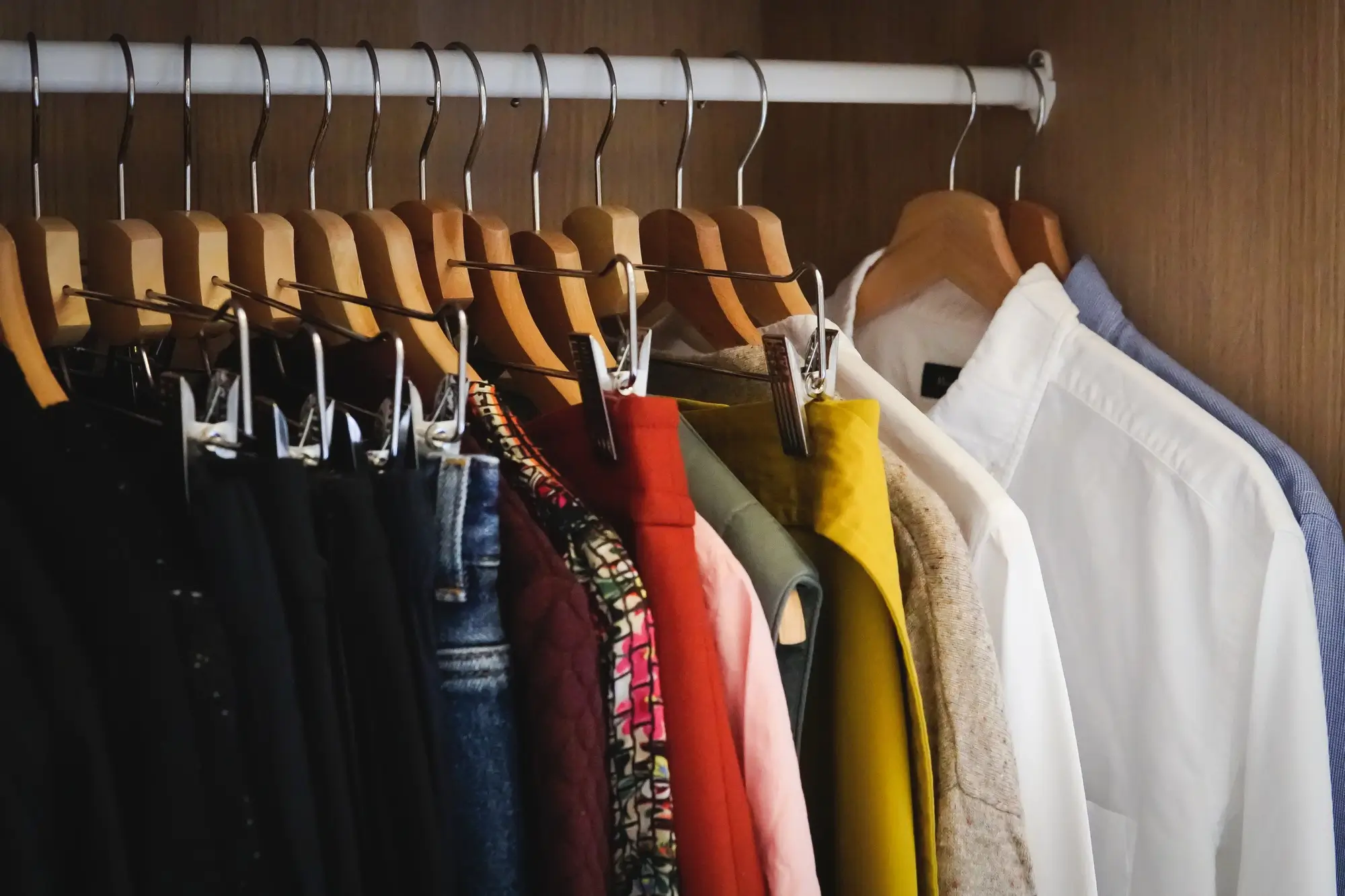
The dresses that looked incredible in the fitting room, then hung untouched for two years. These are closet orphans, clothes you liked enough to buy but never actually wear. Most people replace them instead of fixing them. But a lot of closet orphans aren’t wrong for you. They’re just unfinished.
A tailor can often solve in twenty minutes what a new shopping trip won’t fix, for a fraction of the cost. If you’ve ever wondered whether tailoring is worth it for pieces you almost love, the answer for most garments in this list is a clear yes. Here’s where alterations pay off, and where they don’t.
Trousers and jeans are the most common alteration request, and for good reason: fit problems in the leg and waist are usually simple for a tailor to correct, and the payoff shows up every single time you wear them.
Skip it if the fabric is thin, cheap synthetic that puckers when pinned, or has a busy pattern that won’t align at a new seam. Also skip waist adjustments over two sizes. Beyond that, the pocket and rise proportions start to look off.
Before you drop off a pair of pants, figure out which problem you’re actually solving:
Knowing which one you need before your appointment makes the fitting faster and keeps you from paying for work you don’t actually need.
A jacket that’s slightly wrong in the shoulders will never look right, no matter what a tailor does to the rest of it. But shoulders aside, blazers respond extremely well to small adjustments.
Skip it if the shoulder seams sit wide of your actual shoulder line, or if the jacket needs to come in more than two sizes at the waist. Most tailors won’t take in a jacket more than two sizes, because the lapel, pockets, and armholes were built for the original size and start to distort past that point.
Shoulder fixes are an option, but they mean taking the jacket apart at the sleeve and rebuilding the pad structure, which is costly and rarely worth it unless the jacket itself is worth it. If a blazer only misses on the shoulders, ask a tailor for an honest read before paying for anything else.
Most people assume a button-down shirt either fits or it doesn’t. In reality, shirts are one of the more flexible garments to alter, especially through the body.
Skip it if the shirt has a busy pattern running through the side seams, since tapering there will visibly interrupt the design. Also skip it for shirts with a chest pocket sitting close to the seam line, since moving that seam throws off the pocket placement.
A lot of people buy slim fit hoping it’ll fix a boxy shirt, then find it’s tight in the shoulders or short in the body. Altering a regular fit usually works better, since you’re adjusting a shirt already built for your shoulder width.
Dresses You Loved in the Fitting Room But Never Wear
Dresses are trickier than separates, since one adjustment can affect the whole garment, but a few common fixes make a real difference.
Skip it if the dress has a fitted, structured bodice with boning or built-in support, since those pieces are constructed as a single unit and altering one part often throws off the rest. Also be cautious with heavily beaded or sequined dresses, where the embellishment pattern makes it hard to move a seam cleanly.
Wedding and formal dresses usually need multiple fittings, not one visit: a preliminary check, adjustments, then a final fitting closer to the event. Build in that timeline. Rushing a multi-fitting alteration is where mistakes happen.
Coats are one of the best alteration investments simply because of how long they last. A well-made coat, altered to fit properly, can be worn for ten or more years, which makes the upfront cost of tailoring easy to justify.
Skip it if the coat has heavily padded or quilted construction, since the internal fill makes it difficult to take in cleanly. Also skip leather or suede coats unless you’re working with a tailor who specifically handles those materials, since standard sewing techniques don’t hold the same way.
Once a coat is altered, care matters more, not less. Wrinkles or wear near a new hem or cuff stand out precisely because the rest of the coat fits so well. Regular dry cleaning keeps altered seams from shifting or puckering between wears.
Vintage and secondhand pieces were built for a body that isn’t yours, which is why alterations matter more here. Older construction also tends to use more fabric and sturdier seams, making it a better candidate for tailoring than fast fashion.
Skip it if the seams show wear, thinning, or discoloration, since altering a weakened seam can tear it further. Delicate fabrics such as silk chiffon or lace need specialized handling, too.
If you’re shopping secondhand, check the inside seams before you buy. Turn the garment inside out and look at the seam allowance (the extra fabric beyond the stitch line). More allowance means more room for a tailor to work with; less limits what’s possible later.
Some garments aren’t about fit at all. A parent’s old flannel, a grandmother’s dress, a father’s suit jacket. These pieces carry weight that has nothing to do with how they measure, and alterations are often the only way to actually wear them instead of storing them.
Skip wearable alteration if the fabric is too fragile to handle a second round of stitching. In that case, ask about preservation instead.
If a piece is too fragile to safely wear again, a good tailor will say so rather than attempt a fix that won’t hold. Preservation options, such as a shadow box or repurposing a section into a pillow or quilt square, suit garments with more sentimental than functional life left.
Being up front about the limits of alterations is what separates a good tailor from one who’ll take your money on a lost cause. A few things alterations cannot reliably fix:
Before you commit to anything new or secondhand, put it on and check the shoulder seam first; that’s the one area alterations can’t reliably fix. If it sits right, everything else on this list is fair game. If it doesn’t, walk away, no matter how good the fabric or price looks.
At Cavalier Cleaners, our in-house master tailors have been getting Northeast Ohio’s clothes to fit right for more than 90 years. Every hem, taper, and waist adjustment happens right in your local store, handled by people who do this work every day, not shipped out and forgotten.
For anyone looking for alterations near Fairlawn, Ohio, bring in the pieces you’ve been holding onto and let our tailors tell you what’s possible. Call us today at (330) 864-1011 or schedule your FREE Pickup and Delivery Service online.