At first glance, your wedding dress may look perfectly clean. The lace is still soft, the satin still smooth, and there’s no obvious sign of damage. You might carefully zip it into a garment bag, confident it’s protected.
Then, months later, you pull it out of storage and notice faint yellow spots, darkened seams, or discoloration that definitely wasn’t there before. It can catch you completely off guard, especially if you remember being so careful all day and never seeing a spill or stain at the time.
To help you protect something so meaningful, let’s explore five common wedding-day stains that can quietly affect your dress long after the celebration ends.
These are the kinds of spills most brides don’t worry about, and that’s exactly why they cause problems later. Champagne toasts, white wine, and clear cocktails feel harmless in the moment because they don’t leave obvious marks.
You may dab the fabric, let it dry, and move on without a second thought. Unfortunately, what dries clear on your wedding day doesn’t always stay that way.
*Professional cleaning targets these invisible sugars early, before oxidation can set in. Even when the dress looks spotless, those residues are still there, and they’re one of the most common causes of delayed discoloration.*
Every bride sweats on her wedding day, and that’s completely normal. With all the nerves, dancing, hugging, and hours in structured fabric, your body naturally leaves behind a few traces. These marks don’t look dramatic or messy, which is why they’re easy to overlook. But over time, they can quietly change how the fabric looks and feels.
Sweat contains salts, while natural body oils coat fibers and attract dirt. As these substances sit, they oxidize and slowly weaken fabric structure, often showing up as yellowing or dull patches months later. Because wedding dresses are made from delicate materials, these changes can spread beyond the original contact area.
*Timely professional care removes sweat and oil residues before they settle permanently. This step matters just as much as treating visible stains, and it plays a major role in long-term preservation.*
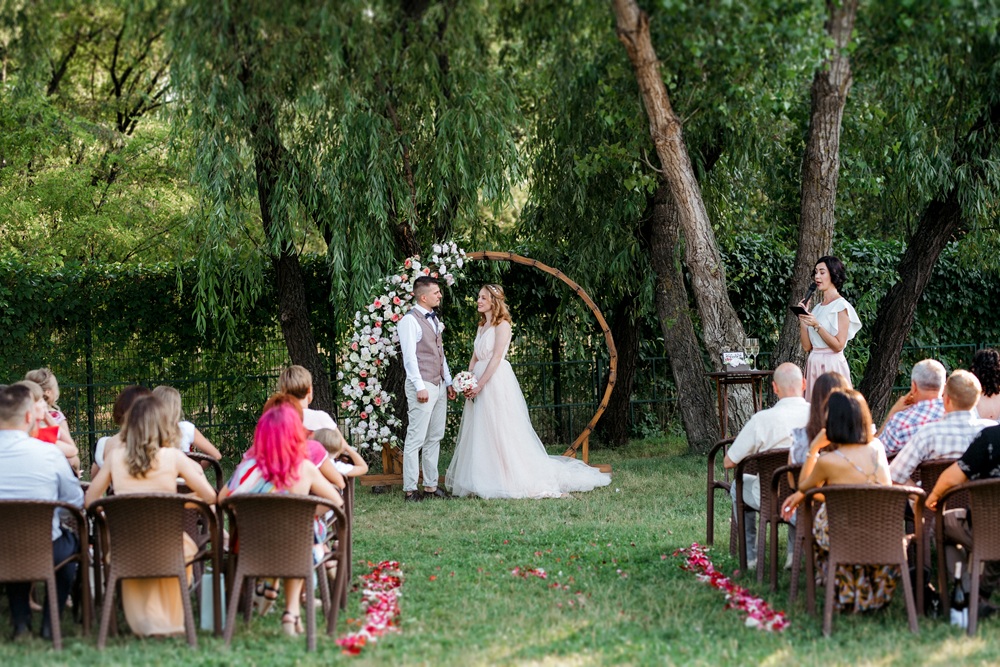
Outdoor weddings and photo sessions create unforgettable moments, and a few hidden risks for your dress. Grass, soil, and greenery don’t always leave bold green marks right away. Often, they fade as they dry, giving the impression that no real damage was done. In reality, organic stains behave differently over time.
Ceremony aisles, lawn photos, and even walking to the car after the reception can expose hems and trains to grass and dirt. DIY spot treatments often make things worse by spreading pigment instead of lifting it. Rubbing or using water can also push stains deeper into layered fabrics.
*Professional cleaning uses controlled methods to safely break down organic compounds. That precision prevents spreading and keeps hidden stains from resurfacing later.*
Hair and makeup help you feel your best on your wedding day, but they also leave behind invisible traces. Foundation, setting spray, self-tanner, and skincare products transfer easily onto fabric without obvious signs. These products often sit quietly in the fibers until time reveals them. That delayed reaction is what surprises so many brides.
These products contain oils, pigments, and alcohols that interact with fabric over time. Pigments oxidize, oils attract dust, and sprays leave residues that slowly darken. Because the staining process is gradual, discoloration often shows up months later rather than right away.
*Professional preservation focuses on these high-contact zones, even when they look clean. Early treatment keeps cosmetic residue from becoming permanent damage.*
Wedding desserts are among the most overlooked sources of stains. Cake, frosting, chocolate, and late-night snacks tend to leave sticky residues rather than visible marks. You may brush off crumbs and assume the dress is fine. But sugar behaves very differently once it settles into fabric.
Frosting often lands on bodices, skirts, and sleeves during cutting and serving. Drinks and desserts late in the evening can also hit lower layers without notice. Left untreated, sugar can slowly weaken your fabric and alter its appearance and feel.
*Professional cleaning removes these residues before crystallization sets in. That step protects both the appearance and the structural integrity of the dress long after the celebration ends.*
If your dress looks clean today, that doesn’t always mean it’s protected for the years ahead. Hidden spills, sugars, and body oils can quietly settle into delicate fabrics, causing yellowing or damage long after the wedding day memories fade.
At Cavalier Cleaners, your dress is treated with a gentle, professional Wedding Dress Cleaning and Preservation Service backed by four generations of fabric care expertise right here in Medina, Ohio. Acting sooner gives your dress the best chance to stay as beautiful as the day you wore it, and helps avoid problems that become harder to fix with time.
Contact Cavalier Cleaners today, or schedule your Wedding Dress Cleaning and Preservation Service online.
Online Scheduling: https://mycavalier.smrtapp.com/custx/login
Location: Medina, Ohio
Phone: (330) 992-2310