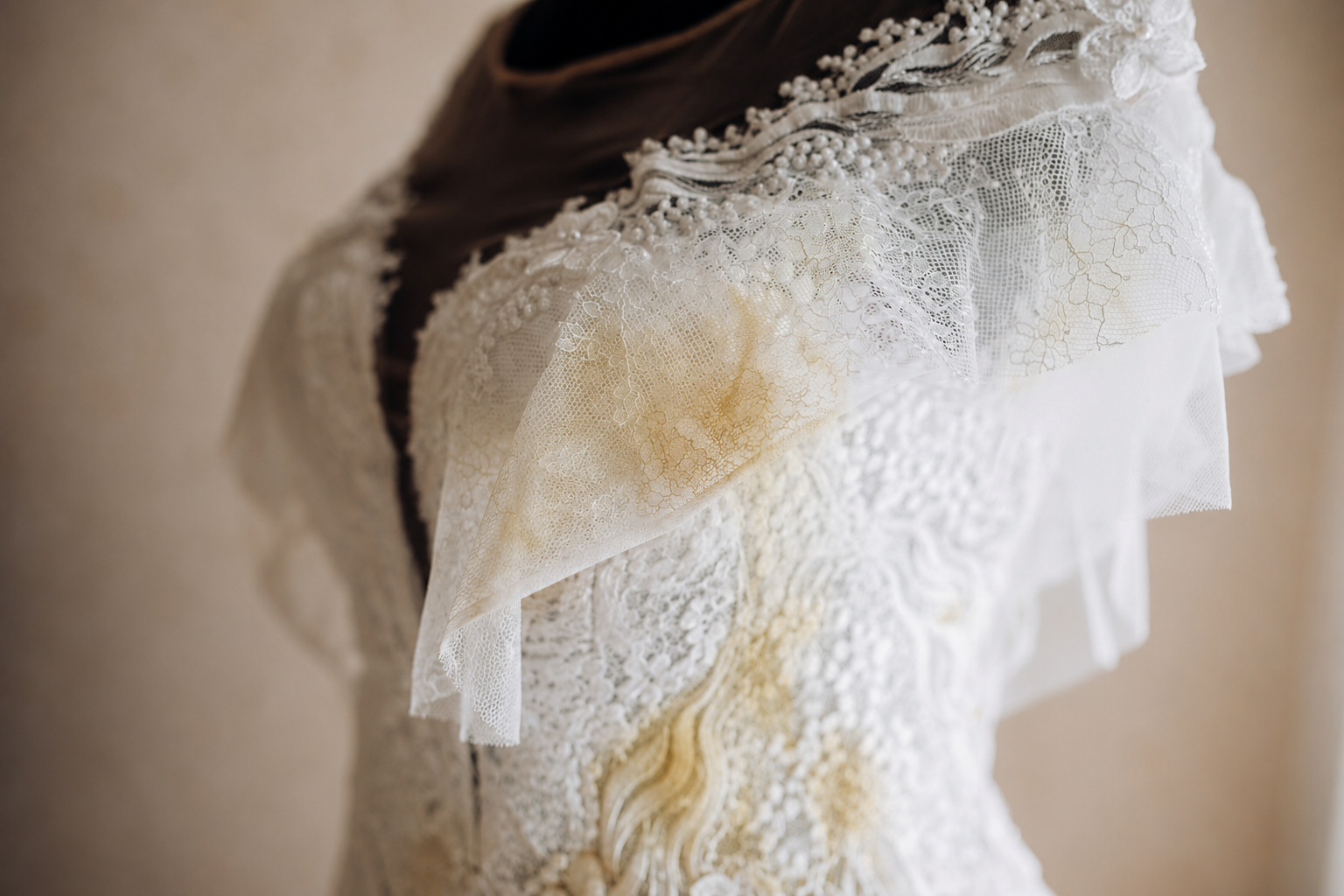
You pulled it out of the box expecting white. Maybe ivory. What you got instead was something closer to cream, tan, or a shade you don't have a name for but definitely weren't hoping to see.
Before you assume the worst, that dress is very likely not ruined. In most cases, a yellowed wedding dress can be significantly restored through professional wedding dress preservation and restoration treatment, and the results are often better than brides and mothers expect walking through the door.
This guide explains exactly why yellowing happens, what affects how fully it can be reversed, and what the professional process actually looks like.
In most cases, a yellowed wedding dress can be significantly restored. How close to original the results get comes down to three things:
| Factor | What It Means for Your Dress |
|---|---|
| Fabric type | Synthetics restore more completely than natural fibers. Polyester responds better than silk. |
| Severity of yellowing | Light, even yellowing responds faster and more fully than deep, concentrated discoloration. |
| Storage conditions | A dress stored in acid free materials in a climate controlled room has less embedded damage than one stored in a plastic bag in a hot attic. |
Most wedding dresses fall somewhere in the middle of all three factors, and most of those produce results that range from significant improvement to near complete restoration. The dress you're looking at right now is probably more fixable than you think. Don't give up on it until a specialist has seen it.
This is the part that surprises most people. The dress looked perfectly fine going into the box. So why do wedding dresses turn yellow?
Perspiration, body oils, champagne, sugar from cake or drinks. None of these leaves obvious marks in the hours after a wedding. But left untreated, those organic residues oxidize over months and years. The chemical reaction turns them yellow or brown. It's the same basic chemistry that turns a cut apple brown or old newspaper yellow.
A dress that looked spotless going into storage wasn't actually clean. It was carrying stains that hadn't shown their color yet. This is not a sign of negligence. It's what happens when organic residue is left to sit inside fabric.
The materials the dress was stored in may have contributed as much as the stains themselves:
The wrong materials don't just fail to protect the dress. They actively damage it. This is precisely why proper wedding dress preservation matters so much.
If the dress was stored in a warm environment, an attic, a garage, a closet in a house without consistent climate control, heat sped up both oxidation and acid damage considerably. The warmer the environment, the faster the yellowing progressed.
When people ask why wedding dresses turn yellow, the honest answer is rarely just one thing. It's usually all three of these factors working together, quietly, over years.
Not all fabrics yellow the same way, and not all respond to restoration treatment equally.
Synthetic fibers don't absorb oxidation the way natural fibers do. The discoloration sits closer to the surface of the fabric, which means professional whitening treatments can reach it more effectively and lift it more completely.
What to expect: Near original whiteness in most cases, even with moderate yellowing. Results on synthetic gowns tend to be the most dramatic. If your dress is polyester or a polyester blend (check the care label inside), the odds of a strong restoration outcome are high.
Natural fibers are more porous. Oxidation sinks deeper into the fiber structure over time, which makes it harder to fully lift without risking damage to the fabric itself. Professional treatment produces real, visible improvement on silk and acetate gowns.
What to expect: Significant visible improvement. The difference between "yellowed" and "slightly warm" is enormous, and most brides or mothers are genuinely happy with the result. A trustworthy specialist will tell you this honestly upfront rather than promise results the fabric's structure cannot deliver.
The bottom line on fabric: Synthetics restore more completely. Natural fibers improve significantly. Both are worth treating. A professional assessment before treatment tells you exactly what's realistic for your specific dress.
Understanding how to restore a yellowed wedding dress professionally means letting go of what most people assume the process looks like. It is not a single soak. It is not a bleach bath. It's a careful, methodical process that treats your dress as the individual garment it is.
The goal at every stage is improvement without damage. Sometimes that means a slower process. It's always worth it.
Cavalier's Cleaners in Fairlawn offers free yellowed dress assessments. Bring yours in and we'll tell you exactly what's possible before any work begins.
Every home remedy you're considering right now has a real risk of making things worse. This isn't overcaution. It's what restoration specialists in Fairlawn, Ohio see regularly when dresses arrive after a DIY attempt.
| Home Remedy | What It Actually Does to the Dress |
|---|---|
| Household bleach (chlorine bleach) | Destroys silk fibers almost immediately. Can cause permanent yellowing on synthetics, the opposite of what you want. May dissolve embellishment adhesives and damage beading thread. |
| OxiClean or oxygen based brighteners | Not formulated for wedding fabrics. Can cause uneven splotching that's harder to correct than the original yellowing. The reaction is unpredictable on bridal materials, especially silk. |
| Sunlight bleaching (hanging in direct sun) | UV exposure breaks down fabric fibers and lightens unevenly while doing nothing to address oxidized residue underneath. A sun bleached dress may look lighter but the fabric is structurally compromised. |
| Home washing machine | Agitation and water pressure can damage beading, lace, and structured elements beyond repair. A dress that survived decades in a box may not survive a single spin cycle. |
| Baking soda or vinegar soak | Neither has the chemistry to reverse oxidation on bridal fabric. May leave residue that interferes with professional treatment later. |
Every home remedy you try before a professional assessment narrows the options a specialist has to work with. The dress you brought in with uniform yellowing is easier to treat than a dress with bleach damage, splotchy brightener stains, or a broken neckline from a spin cycle.
Don't try bleach. Don't try sunlight. Don't try the thing you saw on Pinterest. Just bring it to Cavalier's and let us take a look. A free assessment costs you nothing and gives you an honest picture of what's possible before anything touches the fabric.
The marks left on a wedding dress tell a story. Champagne from the toast. A smudge from the dance floor. The invisible trace of a long, joyful day. Those things matter, and so does making sure they don't quietly take the dress down over time.
At Cavalier Cleaners in Fairlawn, Ohio, we handle yellowed gown restoration with the zone by zone precision this work requires. Whether your dress came out of storage looking worse than you expected or you're finally ready to preserve it properly after a delayed start, we'll give you an honest assessment of what's possible and handle it with the care it deserves.
Bring your dress in or give us a call. We'll take it from there.
📞 Phone: (330) 359-1443
📧 Email: ashley@mycavalier.com